By Girl Up USA Youth Advisors, Nikki R. and Sahasra Y.
Every September 28, the world observes the World Day of Migrants and Refugees. This day not only commemorates those who have travelled for a better life, but it also serves as a reminder that behind the headlines, behind the debates, and behind the statistics are millions of real people moving across borders in search of dignity and safety. While the migrant group applies to many, girls have often been left invisible in this global conversation. Migrant girls are more than statistics. They are daughters, students, leaders, advocates, and visionaries. Their stories reveal not only the systemic barriers that displacement creates but also the resilience and power of youth organizing for change.
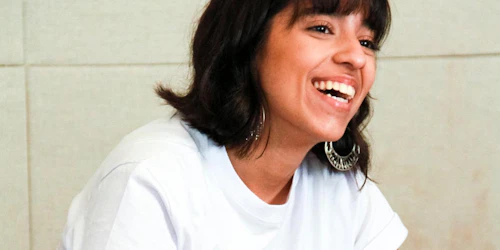
In this feature, we share the voices of three young women: Paz María from Argentina, Imari from the United States, and Sophonie, a Haitian American student and nonprofit founder. Each of them demonstrates how migration, political unrest, and girls’ rights intersect in urgent and often overlooked ways. Their stories and insights remind us that all girls’ rights are human rights and that we are truly connected beyond borders.
Girls’ Rights Are Human Rights
At the heart of migration lies a search for dignity. But for millions of migrant girls, dignity remains out of reach. They are disproportionately vulnerable to trafficking, child labor, sexual violence, and exploitation. According to UN High Commissioner for Refugees, one in three refugee girls is at risk of sexual violence during displacement. The UN Women Commission reports that many migrant women work in informal economies where they face abuse without legal protection.
For Sophonie C., a Haitian American graduate student and the co-founder of Posterity International, those realities became clear when she visited the Zaatari refugee camp in Jordan. While the camp had developed significantly since its opening, she was struck by the inadequacy of healthcare for women. “They suffered from period poverty; they suffered from maternal mortality at a very high rate,” she recalled. Walking through the maternity ward, she saw how access technically existed but was not equally practiced. For her, these gaps in care reflected the truth that girls and women very often face the burden of access to care.
Sophonie’s perspective is shaped not only by her academic journey across three continents but also by her family history. As the daughter of Haitian immigrants, she witnessed her mother helping newly arrived Haitians navigate a hostile immigration system. She also saw how foreign interventions and structural inequalities created conditions unsafe for migrants. For her, immigration is not a “crisis,” but rather a way for people to access the education, healthcare, and safety that are their human rights.
Her advocacy is not limited to analysis. Through her nonprofit, she spearheaded the Care for Congo initiative, raising over $83,000 to support displaced women and girls with hygiene kits and skills training.
Interconnected Struggles, Interconnected Rights
Education, healthcare, political participation, and safety are interconnected. Migrant girls live at this intersection, where systemic barriers add up.
Paz María J., a high school student from Córdoba, Argentina, has never migrated herself. However, through her project “Naomi Wolf,” which facilitates sexual health education workshops, and her youth platform that elevates immigrant voices, she has witnessed how discrimination shapes the lives of her peers from Peru and Bolivia. In Argentina, she explained, racism is embedded in language itself. Phrases like “she is so Bolivian” are used as slurs, casually embedding exclusion into daily conversation. For young immigrant girls, this casual racism can easily translate into deep insecurity and pressures to conform.
She shared how the girls she worked with invested their scarce resources not in their education or empowerment but in beauty products and treatments to make their skin lighter or their hair straighter. “Girls are pressured to be whiter, to be an object of desire,” she explained. These ideas further fuel sexism and racism, as girls are told their worth depends not on their ideas or potential but instead on Eurocentric beauty standards.
Paz believes that politics has reinforced these dynamics. Argentina’s current president has promoted restrictive immigration policies, worsening discrimination. But the problem is not unique to Argentina. She noted that the U.S., often the center of global immigration debates, overshadows the struggles migrants face in Latin America. Yet the stories of policing immigrants, exploiting their labor, and silencing girls are still prevalent.
Her message is clear: those most affected must be the ones leading the conversation. “If you have the privilege, your role is to pass the mic,” she insisted. Creating spaces where migrant girls can speak for themselves is what true justice is.
Breaking the Silence, Claiming Power
Paz’s work highlights the silencing of migrant girls, and Imari H. underscores the urgency of breaking that silence. A law student in Boston and a former Miss America local titleholder, Imari did not grow up navigating the immigration system herself. But through her Haitian boyfriend and his community, she came face-to-face with the inefficiencies and injustices baked into the U.S. immigration process.
Temporary Protected Status (TPS), she explained, is meant to provide relief for migrants from countries in crisis, but it is difficult to receive. “By the time you get the application to apply for the extension, the one you currently have has expired,” she said. The result is fear, instability, and vulnerability. All of these processes are expensive, as immigration applications often cost thousands of dollars.
Imari is particularly critical of the stereotype that women migrate for “anchor babies.” In her view, this narrative not only distorts reality but also demonizes mothers. “Every mother would do what is best for her child,” she said, pointing out that her own parents worked tirelessly to ensure her life was better than theirs. To dismiss migrant women as manipulative is to deny their humanity and natural impulse to provide for their children.
She prides herself on education and advocacy as a solution. She urged young people not to wait until they hold political office to act. “Closed mouths don’t get fed,” she reminded us. Whether through contacting local representatives, joining community organizations, or raising awareness on social media, young people have both the responsibility and the power to shape immigration policy.
Multiple Burdens
Across all three stories, a pattern emerges as we see the various burdens that migrant girls carry. They are marginalized as migrants, as women, and often as people of color. These burdens intersect, creating unique vulnerabilities, from period poverty in refugee camps to racist beauty standards to legal insecurity in U.S. universities.
Yet these burdens also underscore the interconnectedness of girls’ rights globally. When a girl in Argentina feels pressured to whiten her skin, it reflects the same systems that deny Black mothers in the U.S. proper maternal care. When a refugee girl in Jordan cannot access menstrual products, it connects to the same stigma that keeps period products expensive and inaccessible in wealthy nations. Migration makes these links visible. It shows us that injustice anywhere can affect people miles apart.
But if injustice is interconnected, so is advocacy. Each of these young women exemplifies how grassroots activism, legal reform, and international advocacy can bring about change. From youth-led workshops to law school classrooms to nonprofit organizing, they remind us that advocacy is not limited; anyone can do it.
Your Voice Has Power
The most striking lesson from these stories was that change begins by refusing silence. As Sophonie put it, “Advocacy doesn’t start with a microphone. It starts with a conversation with your neighbor.” Paz echoed this by insisting on passing the mic. Imari added that systemic change requires boldness: “If you want change, you have to ask for it.”
This is the essence of Beyond Borders. We believe that young people in the United States can and must be part of global movements for justice. Immigration is not just an issue “over there”; it is a defining issue here, shaping our communities, our schools, and our futures.
Call to Action
Reflecting on this past World Day of Migrants and Refugees on September 28th, 2025, we invite you to move from awareness to action. Here are three ways you can stand with migrant girls today:
- Research Locally: Find out whether your state or district has recently passed, blocked, or debated legislation connected to migrants’ health rights or reproductive justice. Write a short 3–4 sentence summary of the policy stance and why it matters. Upload a screenshot of your findings to our Call-to-Action (CTA) form.
- Join the Global Movement: Add your name to UNHCR’s #WithRefugees petition. Share the link with at least three friends and upload a screenshot of your confirmation to our CTA form.
- Raise Your Voice with Elected Officials: Use RAICES Action’s pre-drafted template to email your representative. Add one personal line: “As a young person, I want to see policies that protect migrant girls from violence and exploitation.” Then share a screenshot of your confirmation to our CTA form.
Your action may feel small, but multiplied by thousands, it becomes powerful. We encourage you to share your efforts with Girl Up through email or Instagram (@girlupusa). When you sign, share, or speak, you affirm a truth too often denied: girls’ rights are human rights.
Looking Ahead
Migration, at its very core, has always been about belonging. It is about whether a girl fleeing violence can continue her education, whether a mother crossing borders can give birth safely, and whether a teenager navigating racism can find pride in her identity. On the World Day of Migrants and Refugees last week, we were reminded that every migrant girl deserves equity.
Paz, Imari, and Sophonie showed us that even in the face of systemic injustice, girls are not only survivors; they are leaders. They have built classrooms of solidarity, nonprofits of care, and legal careers rooted in justice. Their voices challenged us to expand our vision of justice beyond borders, and their resilience reminded us of what is possible when we truly listen.
For those of us in the United States, their stories were also a call for action. Reflection doesn’t end with this article; carry it forward in your journey. Whether you live in Buenos Aires or Boston, your voice remains part of this story. You still have the power to act, to speak, and to make sure no girl is invisible.
Work Cited
“Millions of Women and Girls Forced to Flee Face High Risk of Gender-Based Violence: UNHCR.” UN News, 29 Nov. 2024, news.un.org/en/story/2024/11/1157596#:~:text=violence%20in%20Sudan.-,Millions%20of%20women%20and%20girls%20forced%20to%20flee%20face%20high,Mantoo%20told%20journalists%20in%20Geneva. Accessed 8 Oct. 2025.
“Women Migrant Workers’ Human Rights.” UN Women – Headquarters, 30 Mar. 2023, www.unwomen.org/en/digital-library/publications/2016/6/women-migrant-workers-human-rights. Accessed 8 Oct. 2025.