My Girl Up journey began in my bedroom during lockdown. Isolated but eager to connect, I
joined the 2020 Virtual Girl Up Leadership Summit. For the first time, I found a space that
mirrored what was missing in Morocco: a platform led by girls, for girls, rooted in the belief that
we are the experts in our own struggles. That realization shaped not just my worldview, but my
sense of purpose: creating spaces where girls are not just heard, but where their voices drive
systemic change.
Soon after, I connected with the founder of Girl Up Morocco and joined the board, where I
focused on expanding access to education by supporting libraries in the Atlas Mountains,
offering career advising sessions for girls in STEAM, business, and social sciences, and
creating healing spaces for girls impacted by gender-based violence. The Atlas Mountains are
not just breathtaking landscapes; they are also communities on the frontlines of climate
injustice. Repeated droughts and floods have devastated livelihoods, forcing families deeper
into poverty and pushing girls out of school at alarming rates. In moments of crisis, education is
often seen as expendable, and girls are the first to sacrifice their futures. With this loss of
opportunity comes greater vulnerability: many are forced into early marriage or face heightened
risks of GBV in unsafe environments.
Witnessing these realities made me see how climate
disasters are never “gender neutral”, they compound existing inequalities and leave girls
carrying the heaviest burdens.
It was in this work, supporting education and healing spaces in the Atlas, that I began to critically examine the gaps in Moroccan laws that continue to fail survivors. I realized that justice cannot be left to chance or charity, it requires structural, legal protection. That was the moment I began to see law not as an abstract system, but as a tool for justice, and I set my sights on becoming an international human rights lawyer.
Since then, my journey has expanded beyond Morocco. I joined the Girl Up Global
Gender-Based Violence Curriculum Design Team, transforming advocacy into practical
resources to protect survivors. I co-led a session on intersectional feminism at the first MENA
Leadership Summit and later became the leader of the Girl Up Arab World Coalition. There, I
helped launch new clubs across the region, organized a public speaking training with TEDx
speaker Jana Amine, an ecofeminist education camp for +100 girl up members and co-created
a groundbreaking soccer camp in Morocco. As a former varsity player who grew up without safe
spaces for girls on the field, that camp felt like reclaiming the pitch, not just for myself, but for
every girl who deserves to play, to compete, and to belong.
The lessons I learned at Girl Up were not just leadership skills. They were my first political
education. Girl Up taught me that young women can organize, disrupt, and demand justice on
their own terms. That foundation is what pushed me to create Climate Sirens, a feminist
movement that refuses to replicate colonial or patriarchal models of climate work.
From the start, I knew that CS is about centering our girls on the margins, as the authors of their
own liberation. That ethos, born from my Girl Up journey, shaped everything we built. Today,
Climate Sirens is a transnational force with 30 team members across 12 countries, many of
them displaced, persecuted, or living on the frontlines of climate harm.
Through our Umriden Collective, we co-create natural beauty products with women’s
cooperatives in Morocco. We pay women the full value of their labor and reinvest profits directly
into their communities. Already, the work has generated sustainable incomes for hundreds of
women while disrupting the wasteful models of the beauty industry. We have trained more than
5,000 young women in climate resilience, entrepreneurship, and leadership. But training alone
is not the point. What matters is that each of those women leaves knowing she deserves to be a
decision-maker in shaping our planet’s future.
Girl Up taught me that lesson, and I carry it forward by telling every girl we reach: your leadership is not optional, it is essential.
Beyond relief, we are creating spaces of care as resistance. Our healing circles, first online, now
expanding into living circles in Egypt, Syria, and Lebanon, are safe spaces where young women
come together to grieve, to breathe, and to plan. In a region scarred by war and displacement,
these circles insist that healing itself is a political act of defiance. Digitally, we have reached over
26,000 people with campaigns that link climate breakdown to militarism, colonialism, and
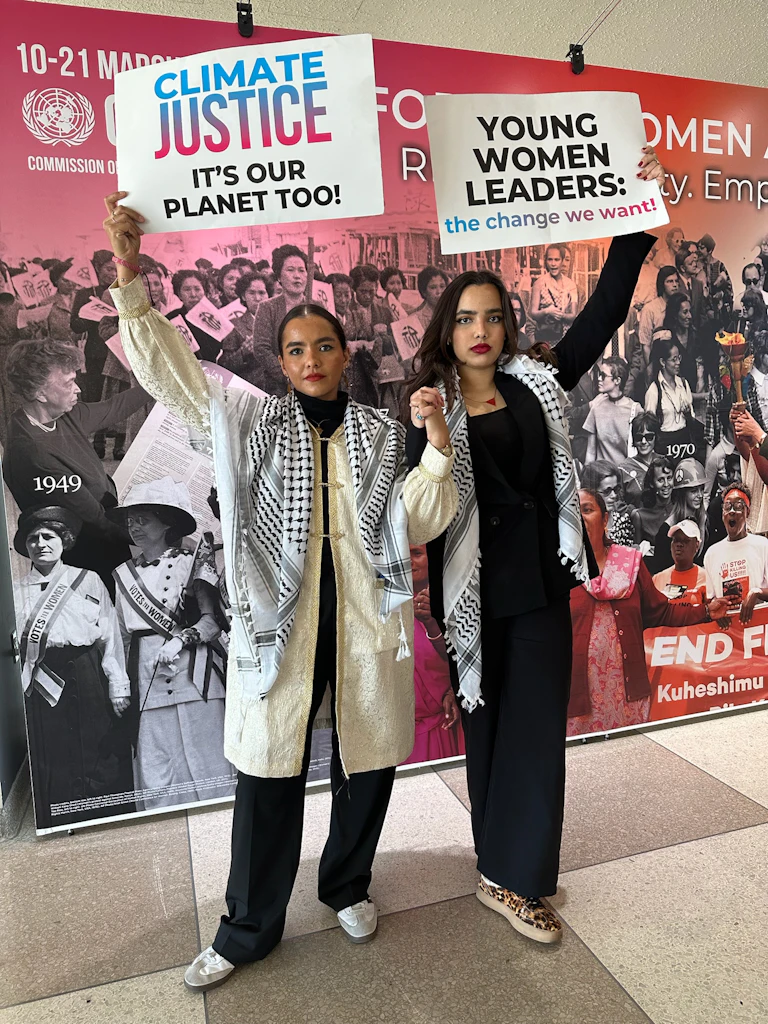
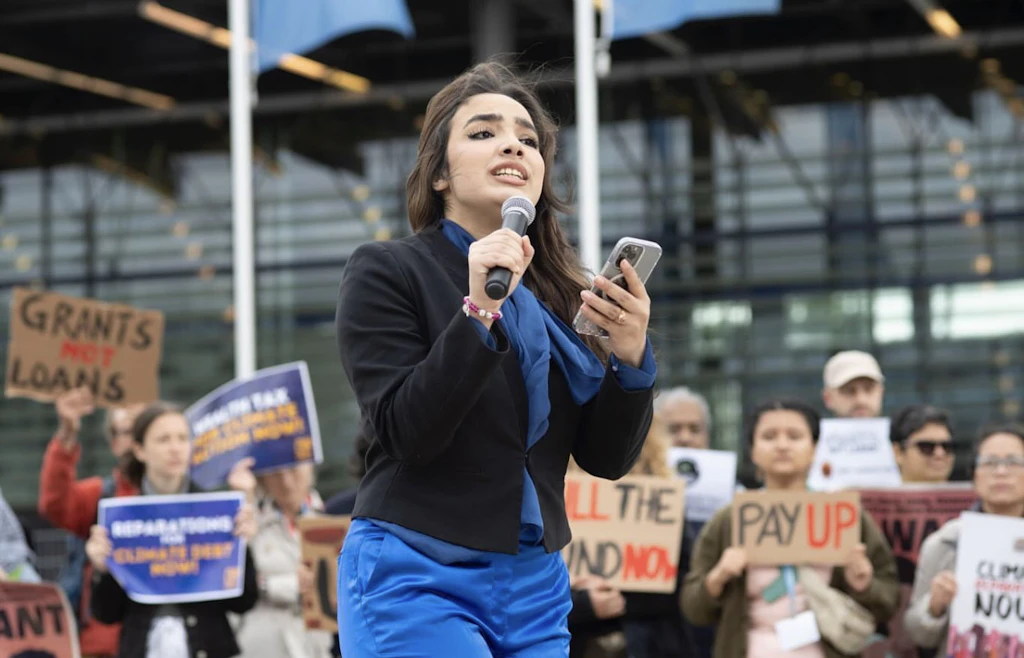
gender-based violence. And at the highest levels, UNGA, COP29, CSW, we have carried our
feminist manifesto into spaces that were never built for us, refusing to sanitize our rage.
If Girl Up was the soil that nurtured my feminist leadership, then Climate Sirens is the forest that
grew out of it. My commitment has never been to wait for permission or beg for inclusion. It has
been to build platforms for other girls, to claim space, to create new tables, and to reimagine
futures where women and girls lead with power, rage, and love. Girl Up taught me that feminist
values are not abstract. They are making sure no girl is ever left to fight alone. Looking ahead, I
want to carry this foundation into law school and specialize in international human rights and
humanitarian law. My goal is to expand legal protections for women globally, to make sure
women have not only safety, but also political power, economic independence, and the ability to
lead climate solutions on the world stage.

Girl Up gave me my first community, my first platform, and my first belief that young women can
change systems. That belief is no longer an idea. It is my life’s work. I hope Girl Up continues to
grow as the radical, global sisterhood that first shaped me. I want to see Girl Up invest even
more in girls from the Global South, the ones who are often closest to the crisis yet furthest from
resources. In 15 years, I hope Girl Up is not only amplifying voices but also shifting power, so
that girls everywhere are not just heard but are the ones making the rules.
If you could give advice to your younger self, either when you started with Girl Up or
before you joined, what would you say?
I would tell her: Your rage is not too much. Your dreams are not too big. You don’t need to wait
until you are older, richer, or more experienced to lead. You are ready now. Trust that the fire in
you is the beginning of something much larger.