Girl Up USA Youth Advisors, Nikki R. and Sahasra Y. | LeadHer Voices
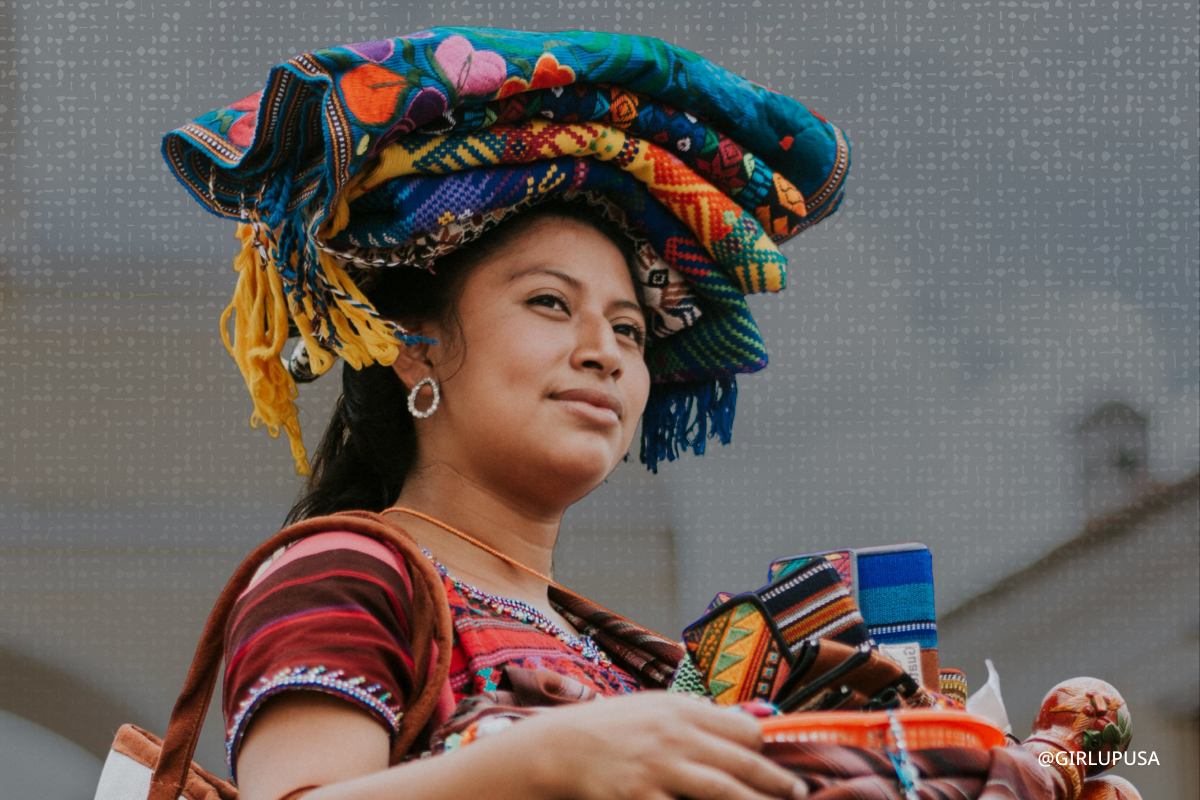
When the International Day of Rural Women passed on October 15th, and following our recent International Women’s Day celebrations on March 8th, we were asked to pause, recognize, and highlight a group that sustains global systems while being systematically excluded from them. That pause ignited our research and outreach. Rural women grow food, preserve culture, pass down ecological knowledge, and hold families together. Yet they are often denied land rights, fair wages, healthcare, and education. For girls growing up in rural and Indigenous communities, these barriers begin early and compound over time, shaping who gets to learn, who gets to lead, and who gets left behind.
Part II: MAIA in Rural Guatemala, Led by Indigenous Women for Indigenous Girls
MAIA began 19 years ago in Sololá as an organization focused on microcredits and financial development for women (known as Starfish). Vilma Saloj, MAIA’s Executive Director of Strategic Partnerships, described a pattern the team could not ignore: the women receiving microcredits kept investing in the same two things, “health and education for their families,” even when “most of them have no education themselves.” In Guatemala, Vilma said, women face “systematic discrimination and machismo,” and when education is blocked, “achieving dreams becomes harder.” That tension became the organization’s starting question: “With the right resources and opportunities, how far could they go?” This is when MAIA was founded to answer that question with “tools, knowledge, and a support network” designed for young women to continue their education.
Vilma introduced herself by locating her work inside her own community. She is a “resilient Maya Kaqchikel woman,” one of six children, and she still lives in the village where she was born. She joined MAIA in 2010 as a mentor. In 2016, she traveled to the U.S. to shadow school leaders. When MAIA’s main program opened in 2017, she became its first director. She speaks Spanish, English, and Kaqchikel, and she is in the final semester of a bachelor’s degree in secondary-level education. She has represented MAIA at the United Nations and the Zayed Sustainability Prize in Abu Dhabi. Her path through MAIA is not presented as an exception; it is a direct example of what MAIA insists is possible when leadership is Indigenous, local, and resourced.
“Our mission is to maximize the transformative power of women,” Vilma said. The vision is “to create a society with equity and opportunities.” And she made MAIA’s structure explicit: “We are an organization led by Indigenous women for Indigenous girls.” MAIA exists, in her words, “to address and transform the story of women and education in Guatemala.” That focus is not limited to students. “We do focus on young Indigenous women who are part of our program,” she explained, “but we also focus on the staff members who are also Indigenous women. That is why we say that we are maximizing their potential.”
Vilma connected the mission to her family’s educational history. “I am a Maya Kaqchikel woman, the third generation in my family to access education,” she said. “My grandmother never had the opportunity to attend school, and my mother only completed eighth grade.” She remembered the essay she wrote when she became the first in her family to complete high school. The line she still carries is the one that became a commitment: “Help the next generation to change their story and break the cycle of poverty and discrimination.”
“And my story is not so different,” she continued, because for Indigenous women in Guatemala, the barriers are layered from birth. Vilma named it “quadruple discrimination,” experienced “for living in a rural area, for living in poverty, for being a woman, and for being Indigenous.” She placed that inside Guatemala’s history too: “Many women in Guatemala have historically been silenced,” and the legacy of a 36-year civil war left women “excluded from decision-making spaces and erased from conversations that shaped the country’s future.”
Education is one of the clearest places where harmful structures show up. Vilma said many students finish elementary school, but secondary and high school remain “out of reach for most,” because education beyond primary school is “largely privatized.” For girls, the barriers rise higher: “57% are forced into marriage or motherhood before the age of 18.” Others are pushed toward informal labor because education “is simply not seen as an option for them.” The pipeline narrows brutally: “Only 2% graduate from high school and fewer continue to university.” “This is why we exist,” Vilma said.
She then listed MAIA’s programs as the structure of a seven-year pathway: the Impulso Program, the MAIA Impact School, the socioemotional and family engagement program, and the Post-Secondary Success Program. “This is a 7-year journey,” she said. Each year, MAIA serves nearly 450 young women and their families, approximately 2,800 people, from over 47 rural highland villages in Sololá.
Vilma described what MAIA is trying to prove at a systems level through three concepts: first, “the capacity of empowered, educated girls to transform their communities and break cycles of poverty”; second, “the unique ability of same-gender and ethnicity staff to implement cutting-edge methodologies in an empathy-driven environment”; and third, how “an organizational abundance mindset can catalyze systemic change through proactive partnership and collaboration.”
Then she moved into MAIA’s four goals for students:
- The first is lifelong learning: “Our graduates attain a minimum of 15 years of education,” with plans shaped around each Girl Pioneer’s ambitions. This matters in a country where Indigenous women average “only 3 years of education.”
- The second is economic autonomy: graduates gain employment in the formal economy in a country where “93% of Indigenous women work in the informal economy” and where “all Girl Pioneers live at or below the poverty line when they enter the MAIA Impact School.”
- The third is A Family on Her Own Terms: MAIA aims for graduates to postpone marriage and pregnancy until an average age of 25, in a context where “57% of young Indigenous women in Guatemala are married or have become mothers by the age of 20.”
- The fourth is Unlocking Leadership Potential: Vilma pointed to Guatemala having “the lowest level of female political participation in the hemisphere” and framed MAIA’s work as part of changing leadership outcomes nationally.
When Vilma defined the term “Girl Pioneer,” she did it carefully. “We call our students Girl Pioneers because they are forging a new path,” she said. Girl Pioneers are Indigenous girls who live in rural areas and below the poverty line; each receives a scholarship to be part of MAIA. She emphasized that “Girl Pioneer” is “a noun, not a descriptor,” and she was direct about usage: “When a girl enters MAIA, she becomes a Girl Pioneer, so we do not recommend referring to a Girl Pioneer as just a pioneer; we use the concept together.”
From there, Vilma explained how MAIA integrates socioemotional mentorship, reproductive health education, and cultural identity. “At MAIA, we have a unique and holistic program that empowers Girl Pioneers,” she said, and the structure is intentional: “All our programs complement each other; this means that without socioemotional and family engagement and a high-quality education, we couldn’t reach our mission.”
She described the Impulso Program first: MAIA provides girls “the academic and socioemotional support they need to successfully transition from primary to secondary school,” addressing learning gaps caused by an “underfunded and inequitable education system.” Each year, approximately 60–75 girls participate. They attend public primary school in the morning (6th grade) and attend MAIA in the afternoon for reinforcement. The MAIA Impact School is “the only secondary school of its scale in Central America designed for young Indigenous women,” and the full-day program “blends Maya culture with STEAM learning, digital literacy, and practical skills” that prepare 250 young women for higher education and formal employment.
Vilma then described the Post-Secondary Success Program, which supports graduates as they move into “higher education, employment, entrepreneurship, or other leadership opportunities.” Graduates receive one-on-one coaching in career planning, workplace skills, and financial literacy, and gain real-world experience through internships and mentorship. The program includes a peer alumni network and a university support fund that offers financial and professional opportunities for young women who are often the first in their families to reach this milestone.
The Socioemotional and Family Engagement Program works with students and families across Impulso and the Impact School to strengthen well-being, leadership skills, reproductive health knowledge, and “vocal empowerment” so girls can lead “choice-filled lives.” An on-site nurse and nutrition team provide preventative services, hygiene kits, referrals, and guidance. Mentors, Indigenous women from the same communities, lead weekly sessions to build soft skills and provide individualized support. They also make monthly home visits to involve the whole family and ensure each girl’s education becomes “a shared commitment.”
Vilma added MAIA’s Local Leadership Development Program, describing how MAIA aims to transform education in rural Guatemala by strengthening educators, mentors, and local leaders through internal and external training. Professional development integrates innovative, girl-centered, and culturally relevant practices. Beyond MAIA, the organization shares approaches with public school teachers, community leaders, and partners through collaborative training and advocacy initiatives. As co-founders of Eduk’at, Ellas al Frente, and VOCES, MAIA is scaling evidence-based practices with a ripple effect meant to expand opportunities for Indigenous girls and strengthen Guatemala’s education system as a whole.
Vilma was also explicit about identity. “At MAIA, we recognize that the Maya Kaqchikel identity is a core strength of our model,” she said. “We do not define who they are or shape their identity for them.” Instead, MAIA supports girls in becoming “successful, professional women” without compromising cultural identity. She returned again to family engagement as a lever for change: “The family support is the key to our success.” She specifically named the importance of fathers: “The father’s participation and commitment to gender equality and his daughter’s education mean starting to start changing the machismo.”
When asked what graduation looks like, Vilma answered without turning it into a neat ending. “Graduation means hope, proud, success and the first real dream,” she said, and MAIA recently celebrated the graduation of its 5th class. But she immediately named the pressure graduates face: “When the Girl Pioneer graduates, she has a lot of pressure; the most important one is to help her family and siblings with the income.” Many want a university, but “the opportunities are limited,” especially for rural Indigenous women. For many, “the first priority is to find a job,” and then “one or two years later, we will go to university.” This reality is why MAIA created its post-secondary success program, providing ongoing coaching, vocational training, and alum support to equip graduates as “leaders in MAIA and changemakers in their communities.” “Graduation doesn’t stop at the ceremony,” Vilma said. “It goes beyond and is the continuation of their journey to achieving their dreams.”
Vilma described Guatemala’s systemic barriers in blunt terms. Guatemala has “the worst gender equity gap in the hemisphere.” Indigenous Maya women represent more than 25% of the population, yet experience exclusion that makes them “among the most overlooked and underestimated on Earth.” Fewer than 20% of Indigenous women complete high school, and 57% are married or have become mothers by age 18. In Sololá, where MAIA works, 98% of the population is Indigenous Maya, and it has the second-highest poverty level in the country. MAIA responds by “investing,” “walking alongside,” and innovating through programs, supporting each Girl Pioneer and staff member. Vilma underscored that MAIA’s claims are backed by outcomes: 97% retention compared to 20% nationally; 61% of graduates in formal jobs versus fewer than 10% of Indigenous women in Guatemala; 73% continuing to university compared to 2% nationally; and students graduating with 11 years of education compared to their mothers’ three.
When asked why she personally believes in MAIA’s mission, Vilma said, “That question is emotional to answer.” Then she insisted on framing her experience as collective: “I want to tell you my story, and this is not just mine; it is the story of young women to the Mayan communities.” She repeated who she is and where she is from: “I’m a Maya Kaqchikel woman and one of six children who live in a rural village in Sololá, Guatemala.” In high school, she dreamed of studying medicine, but her family couldn’t afford it, and the career was inaccessible. She described discovering “the power of formal education” through “the collective impact of the teacher.” She traced her MAIA journey from mentor in 2010 to principal when the school opened in 2017 to her current role. “Now I feel I’m the ambassador of the voices of Maya Kaqchikel women,” she said. “I’m the voice of our mothers and grandmothers who never have an opportunity to be educated.”
Vilma shared one Girl Pioneer’s journey as the kind of story that sits inside MAIA’s data. “I want to talk to you about the story of Andrea,” she said. “She is my inspiration.” Andrea grew up in a family with “many challenges,” including gender-based violence, alcoholism, and a big family. But she also had “a mother, a strong woman who supports her.” Andrea started at MAIA when she was 12. Her academic trajectory was uneven: “She was a great student. She has had some excellent years, some not so good.” She dreamed of completing high school but faced challenges that interrupted attendance. Some days she could not come to school. Sometimes the family could not receive the mentor at home because they were emotionally uncomfortable. Still, “with effort and many sacrifices,” Andrea graduated in 2023, and for her family, “this represents a lot of hope.”
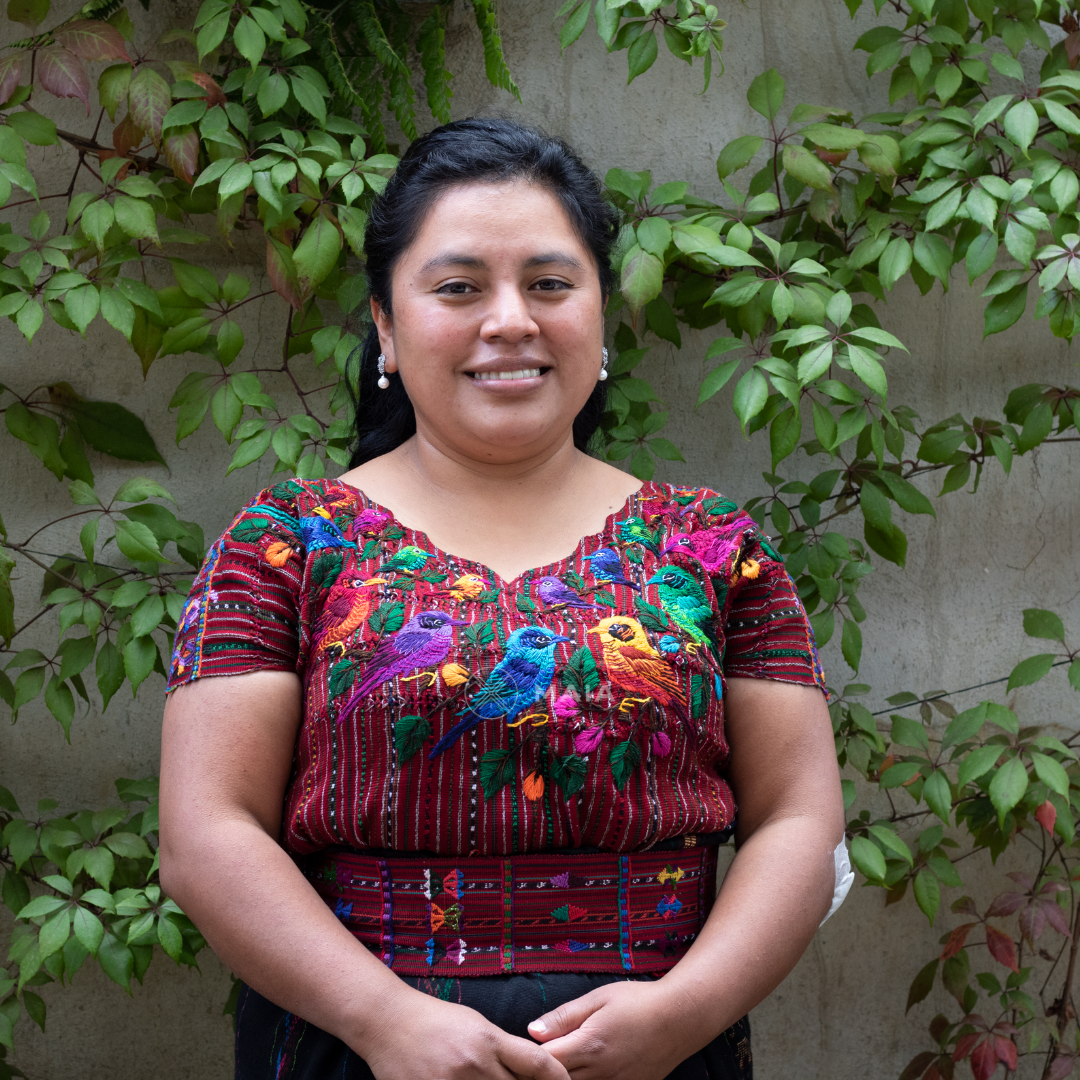
After graduation, Andrea continued in MAIA’s post-secondary program. In 2024, she began a paid internship at CEMACO. After five months, her customer development was strong enough that she was invited to apply for a job. She applied and “won a job opportunity.” Her longer goal was university. With MAIA’s support, she applied to universities and scholarships, submitting applications to five different organizations, universities, and companies that support girls’ education. She became a candidate for the Juan Bautista Gutierrez Foundation Scholarship in Guatemala City, “a very difficult scholarship to win, and for Indigenous girls even more.” In November 2024, she received the news that “changed her life ever”: she was awarded the scholarship. She has now completed her first year studying Systems Engineering. Vilma’s takeaway was simple and unsentimental: “Indigenous women only need people who believe in them and provide a bridge to connect them to opportunities.” Then she asked us to sit with one word. “Imagine what the word ‘Yes’ means for the young Indigenous women. It means a life changing experience.”
Vilma’s message for International Day of Rural Women was not framed as inspiration, but as instruction and refusal:
“My message for all rural Indigenous women is that the conditions where you live do not define you. Or your roots, your identity, your culture don’t limit you to achieve or reach out to your dream.Your courage is your shield in the pursuit of your dreams and in turning them into reality. Let no one and nothing stop you from achieving them.
In our rural communities, the wisdom of our ancestors, our wealth in practices that honor Mother Earth, and the strength of our values and principles live. These are your most valuable assets on the path toward your aspirations. You are a strong and courageous woman, capable of standing against an oppressive and misogynistic system.
¡Ya kowim – You can do it – tú puedes!”
When she described MAIA’s legacy, she chose a verb: “to dignify.” “For me, the legacy of MAIA in the world is to dignify education for young Indigenous women,” she said. “Education in rural areas should be the priority in this century.” She defined dignity as a full support system: high-quality education, emotional intelligence, health, and safety, so girls can live without violence and discrimination. “All women around the world deserve access to quality education,” she said, so they can make informed choices about their bodies, claim their rights, and live “whole and dignified lives.” And she framed the legacy of Indigenous women as identity without apology: “standing without shame and raising our voices within our communities and beyond.” When an Indigenous woman is educated, Vilma said, “she becomes a leader who transforms not only her own reality, but also that of the generations that follow.” She ended where she began; with women as the teachers of life for their communities and for the world.
Call to Action: Turn Reflection Into Action
Reflection does not end when a global awareness day passes. We should all stand together, no matter where we are, to support women working in agriculture. Here are three ways to continue standing with rural women and girls:
- Take the Fair Trade Pledge.
Visit Fairtrade America and commit to buying Fairtrade-certified products that support safe labor practices.
Bonus: Post a photo of one Fairtrade item from your pantry with the caption:
“70% of child labor happens in agriculture (ILO, 2023). Choose Fairtrade to support rural women and children. #Fairtrade #BeyondBorders.” - Do a “DNA test” on your food.
Grab one pantry item, such as coffee, cocoa, rice, or chocolate. Research where it comes from and whether women in that region are involved in its production. If it is not Fairtrade or ethically sourced, find one alternative brand that is. - Support the advancement of rural girls’ education.
Donate to or volunteer with organizations like MAIA, Educate Girls, Malala Fund, or Girl Rising that focus on education access. Search for a certain organization you feel connected to and start a drive or local fundraiser to donate.