Girl Up USA Youth Advisors, Nikki R. and Sahasra Y. | LeadHer Voices
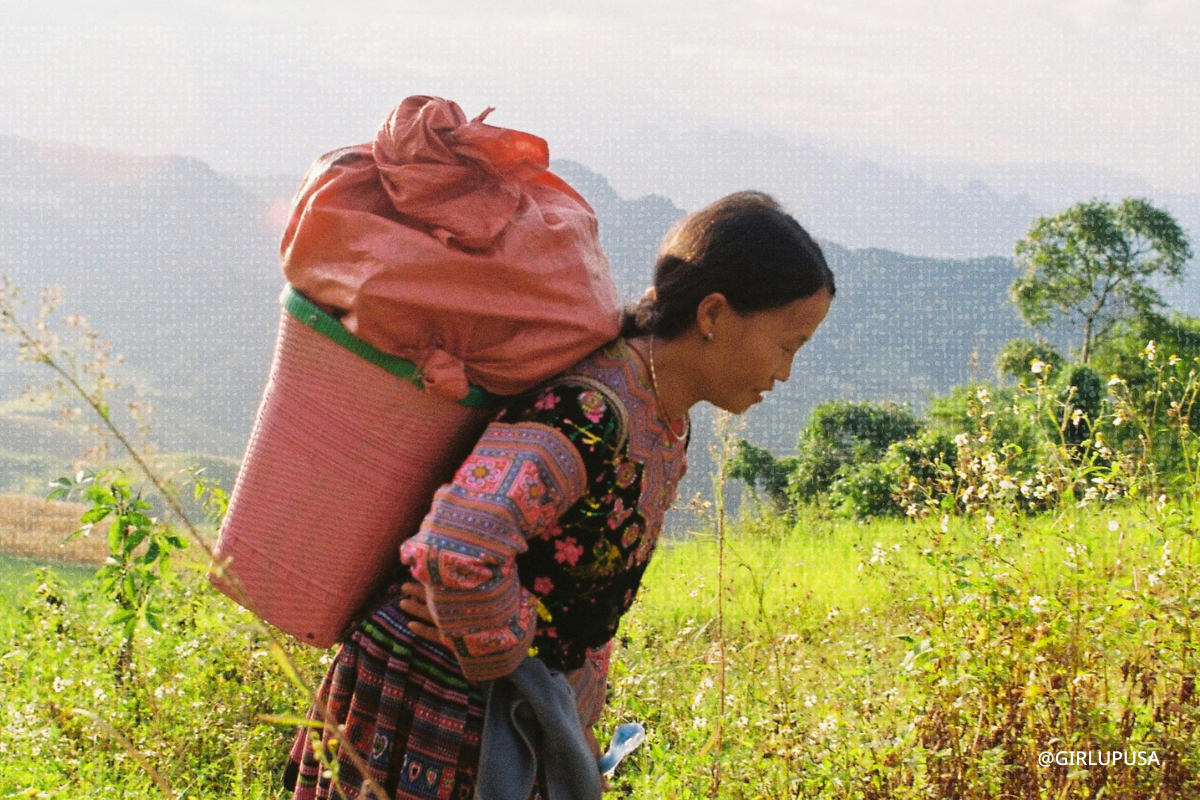
When the International Day of Rural Women passed on October 15, it asked us to pause, recognize, and highlight a group that sustains global systems while being systematically excluded from them. That pause ignited our research and outreach. Rural women grow food, preserve culture, pass down ecological knowledge, and hold families together. Yet they are often denied land rights, fair wages, healthcare, and education. For girls growing up in rural and Indigenous communities, these barriers begin early and compound over time, shaping who gets to learn, who gets to lead, and who gets left behind.
Part I: Rural Women and Girls at the Center of Food Systems and Rights
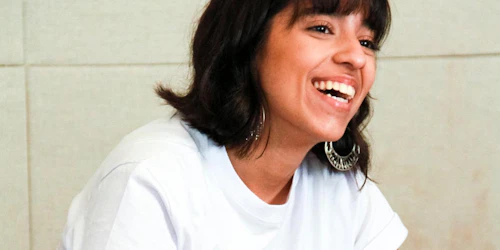
Through our Beyond Borders initiative, we spoke with Jehan, a Moroccan-Amazigh-American college student and longtime Girl Up advocate. Her story bridges rural Morocco and suburban America, showing how place, gender, and access intersect to shape opportunity. Her reflections make one thing clear: Girls’ rights are human rights; when rural girls are denied these rights, the effects extend well beyond their immediate communities.
Girls’ Rights Are Human Rights, Starting in Rural Communities
Globally, rural women and girls experience some of the most entrenched inequalities. According to the International Labour Organization, 70 percent of all child labor occurs in agriculture, most often in rural and Indigenous communities. For example, Indigenous children are 11.6 times more likely to be engaged in hazardous work in Ecuador and nearly three times more likely in Peru compared to national averages. These numbers reveal a hard truth: when systems rely on cheap agricultural labor, girls’ safety and education are often the first sacrifices.
Jehan grew up seeing this dynamic play out within her own family history. Although she was born in the United States, her roots are in rural Amazigh communities in Morocco, where women’s labor is essential but rarely valued. She discussed how rural girls are often expected to stay home, support family labor, and drop out of school early, not because they lack ambition, but because resources are inadequate and expectations are narrow.
While Jehan now lives in a more urban area, she explains that there is still a lack of awareness, particularly living in rural areas. “When you’re young, you don’t realize you’re missing anything,” Jehan explained. As a child, she did not compare herself to wealthier classmates or dwell on what she lacked. It was only later, as she grew older and looked back, that she recognized how limited access to groceries, school supplies, and educational opportunities quietly shaped her path.
That realization now fuels her advocacy. For Jehan, the denial of education, land ownership, and healthcare is not a cultural inevitability. It is a violation of basic human rights that disproportionately impacts girls.
Rural Inequality Is Not Isolated. It Is Interconnected
One of the biggest misconceptions about rural women’s issues is that they are local or isolated. Jehan’s experience challenges that idea. What happens to girls in rural Morocco mirrors what happens to girls in rural India, Latin America, and even underserved areas of the United States.
When girls leave school early to help their families survive, that affects future income, health outcomes, and political representation. When women cannot own or control land, they lose economic power and legal protection. When girls grow up without role models who look like them in leadership or STEM roles, their aspirations diminish, not because of a lack of talent, but because opportunity feels unreachable.
Jehan described how stigma plays a powerful role in maintaining these inequalities. In many rural communities, girls are told, directly and indirectly, that their role is limited to domestic labor. Even when education is allowed, it is often encouraged only in “acceptable” professions, while careers in research, engineering, or leadership are discouraged or dismissed.
“If all you’ve ever seen is one version of life, it’s hard to imagine another,” she said. This lack of visible possibility is one of the most damaging barriers rural girls face.
These issues are deeply intertwined. Education affects healthcare access. Land rights affect food security. Cultural expectations affect political participation. Girls’ rights cannot be separated into categories because real lives do not work that way.
Rural Women as Knowledge Keepers and Climate Stewards
Beyond labor, rural women are also guardians of knowledge. In Morocco, Jehan described how women in her family pass down farming techniques, herbal medicine practices, and land stewardship traditions across generations. Her grandmother’s argan farming is not just an economic activity. It is cultural preservation, environmental protection, and survival knowledge rolled into one.
This traditional knowledge is often overlooked in global conversations about climate change and food insecurity, yet it is essential. Rural women understand local ecosystems in ways that industrial agriculture does not. They know how to maintain soil health, conserve water, and adapt to environmental shifts using sustainable practices refined over centuries.
When rural women lose control over land, or when children are forced into labor instead of school, they lose the ability to share their knowledge. The consequences can have global effects. Food systems become less resilient. Climate adaptation becomes harder. Communities lose autonomy.
Protecting rural women’s rights is not only a gender issue. It is a climate issue, a labor issue, and a food security issue.
The Emotional Cost of Growing Up Without Access
Jehan also spoke candidly about the emotional toll of inequality. As a child, she lived day to day. As a young adult, the weight of global injustice became heavier. Witnessing girls in her family and across the world face even harsher barriers than she once did has been both motivating and deeply frustrating.
“There’s a sense of helplessness,” she admitted. Knowing change is needed, but recognizing it cannot happen overnight, is emotionally exhausting. Still, she refuses to sit back. Instead, she channels that issue into advocacy, education, and organizing.
Her message to young girls is grounded and realistic. Change does not require saving the world alone. It begins with providing one resource, one opportunity, or one opening that allows a girl to imagine a future beyond survival.
The Role of Girls in the Diaspora
For girls in the diaspora, Jehan believes responsibility and possibility go hand in hand. Access to technology, education, and platforms comes with power. Social media campaigns, school clubs, and community organizing may seem small, but they matter.
She started her own organization focused on increasing female representation in STEM and later expanded it to address global girls’ education and access. What began as a small effort became a growing platform. Her advice is simple: do not underestimate small beginnings.
Girls who share cultural backgrounds with rural communities can play a unique role by acting as bridges. Representation matters. Seeing someone who looks like you, speaks your language, or shares your heritage can change what feels possible.
Why Land Rights Matter for Rural Women
One of the most urgent issues Jehan raised was land ownership. In many rural communities, women are denied the right to own land and are often forced to engage in unethical and exploitative labor. Without land rights, women cannot access loans, protect their livelihoods, or secure their families’ futures.
Land is not just property. It is security, income, autonomy, and survival. Jehan has seen women sell land simply to afford food or necessities. If those women had support to aid them in keeping their land and supporting their household, land could instead become a foundation for generational stability.
The denial of land rights is rooted in patriarchy and reinforced by weak governance. According to the Women, Business and the Law data from the World Bank Group, nearly 40% of the world’s economies still limit women’s property rights, with over 90 countries having laws that hinder women’s ability to own land according to a Thomson Reuters Foundation report by Chris Arsenault. Addressing it requires policy change, cultural shifts, and sustained advocacy.
What This Means for Girls in the United States
For girls in the United States, rural women’s struggles may feel distant. However, they still exist: American rural women who are full-time, year-round workers earn a mere 64 cents for every dollar earned by men overall. Food on grocery shelves, coffee in pantries, and chocolate bars in backpacks are all connected to rural women’s labor.
Girls in the U.S. benefit daily from systems that often exploit others. That awareness is not meant to create guilt but responsibility. Understanding these connections allows young people to make informed choices and demand better systems.
Your voice matters even if you have never lived in a rural community. Speaking up in class, questioning where products come from, and supporting ethical sourcing all contribute to cultural change.
Works Cited
International Labour Organization. (2023). Issue paper on child labour and education exclusion among indigenous children. International Labour Office. https://www.ilo.org/sites/default/files/2024-04/Child_Labour_and_Indigenous_children_2023.pdf
International Labour Organization, & Food and Agriculture Organization of the United Nations. (2021). Child labour: Global estimates 2020, trends and the road forward. ILO and FAO. https://www.ilo.org/global/publications/books/WCMS_797515/lang–en/index.htm
World Bank Group. (2023). Women, Business and the Law 2023: The state of women’s legal rights (Assets indicator). World Bank. Data showing that 76 of 190 economies (about 40 %) restrict women’s property rights.
Arsenault, C. (2016, March 16). FACTBOX — Women’s land rights around the world. Thomson Reuters Foundation. https://news.trust.org/item/20160316161656-lw41q/
Center for American Progress. (2016). The gender wage gap among rural workers. https://www.americanprogress.org/article/gender-wage-gap-among-rural-workers/