You might have noticed a change in Rym’s and my titles: we are no longer Girl Up Chief Youth Advisors, but rather Chief Youth Executives (CYEs). This was a deliberate decision, made after reflecting on our first eight months in the role. For Girl Up, it represents a clearer alignment with our vision for what the organization is becoming—not only youth-advised, but truly youth-led. I was, however, surprised by how far behind the conversation about youth representation sometimes felt in the events leading to the 81st session of the United Nations General Assembly (UNGA).
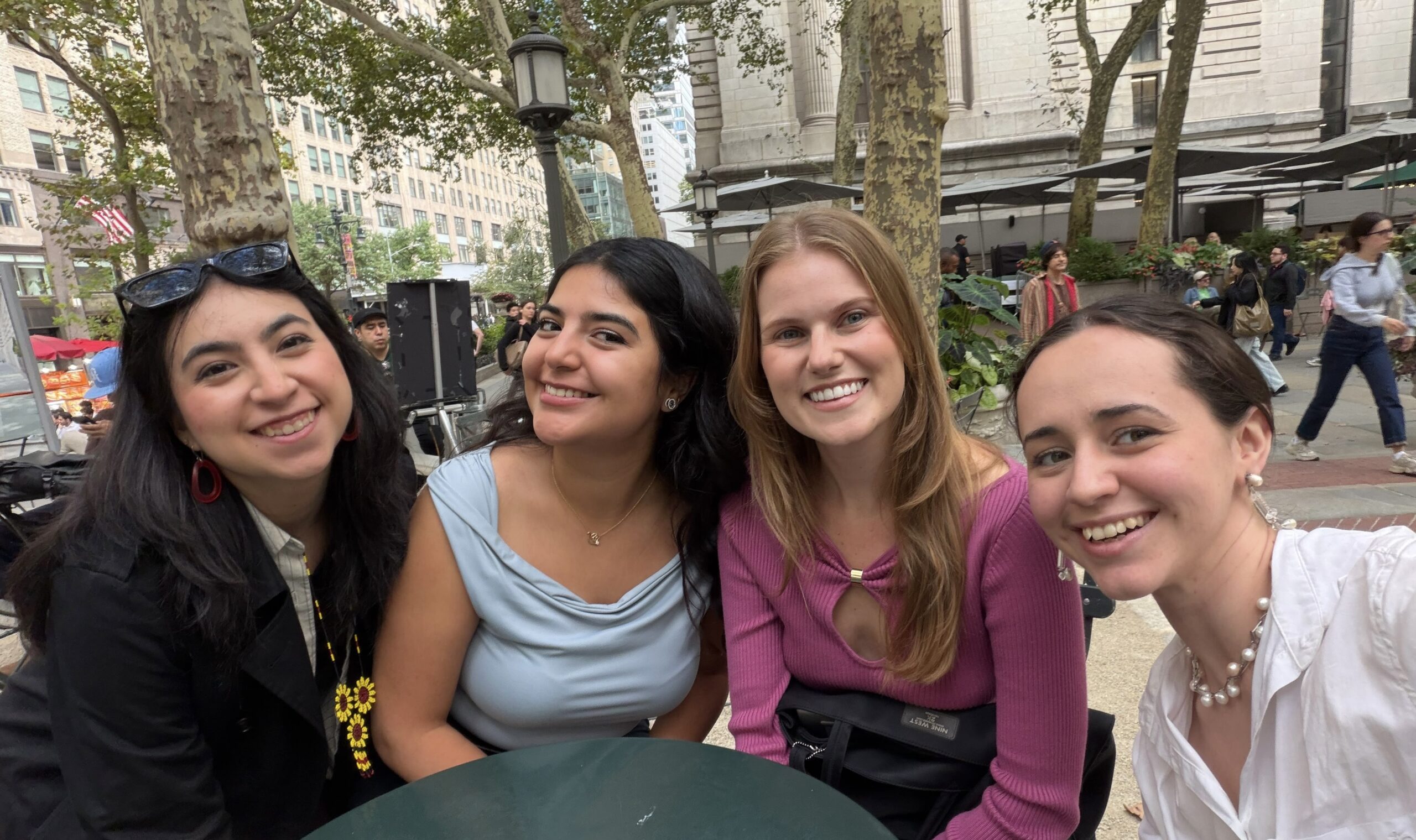
This year, I represented Girl Up during the UN’s high-level week in New York City. Girl Up’s voice was present in conversations spanning a wide range of topics: from feminist philanthropy to women’s movement collectives for action. In these spaces, I am used to being the youngest person at the table—even though I am now 25 years old—but in this year’s UNGA I was happy to see many more young leaders than usual. Put simply, I was the only young person in the room at roughly one-third of the events I attended.
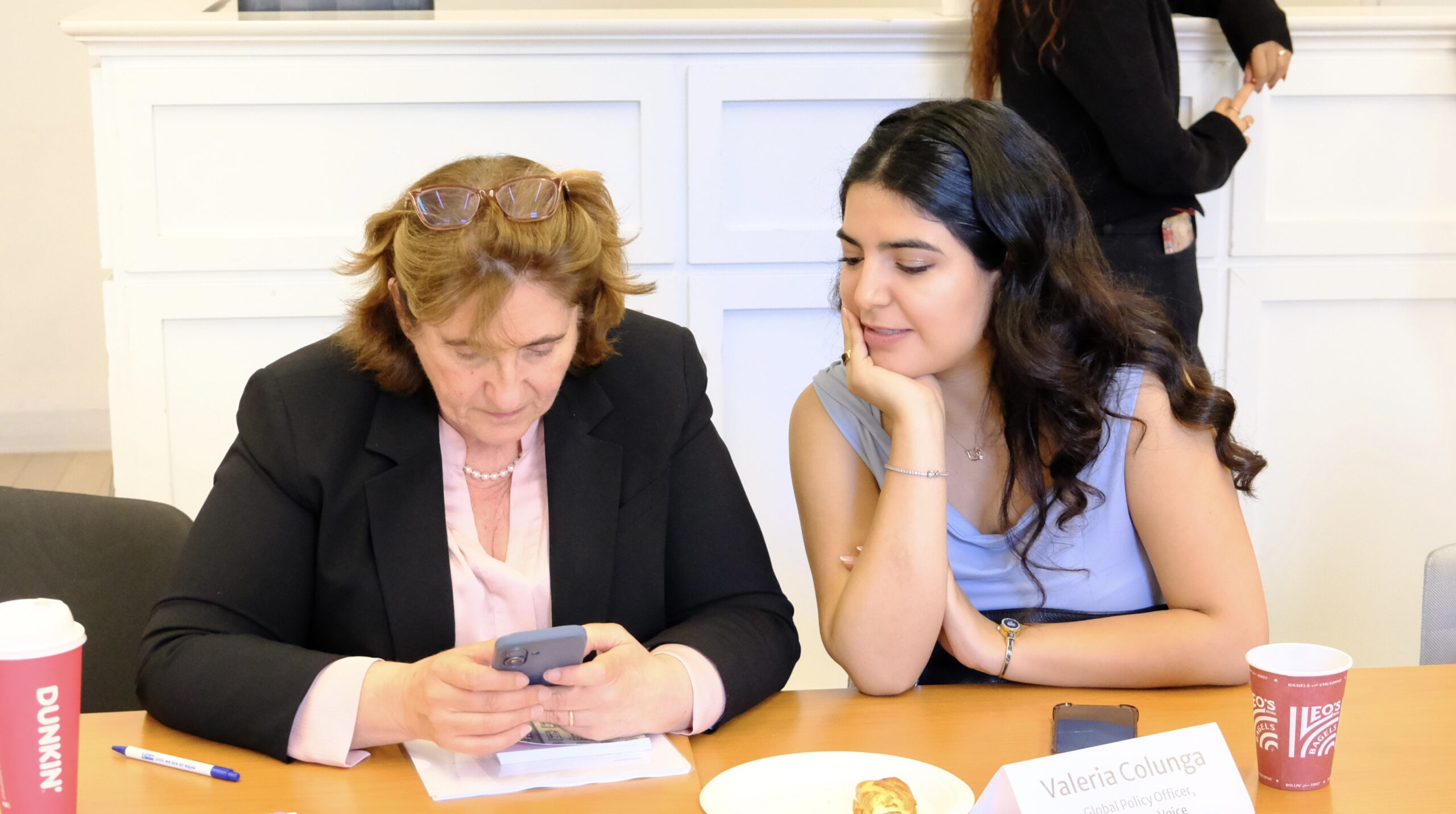
I want to highlight a reflection I had at one of the events I attended, which focused on what young people want to see from the UN. It was a roundtable where about half of the people were adults and the other half were young people, which made sense given the topic of discussion. Most of the remarks emphasized something we already know: young people are fundamental to the UN’s mission to maintain international peace and security to be successful. Nonetheless, I was struck when an adult participant said, with somewhat rebelliousenergy, “I don’t go to events anymore if they don’t let me take a youth representative with me.” Let’s unpack that!
I think the statement is moving in the right direction: one where adults act as true allies for young people by “gatebreaking” spaces where we might otherwise not be invited. What surprised me was not the statement per se, but that, in the context of UNGA81, having young people in rooms of power still feels like something rebellious. I wondered why this felt so dissonant to me as a somewhat “veteran” in the youth-space that I have been a part of since I was 16 years old. Once I found the answer, I raised my hand.
I said: “What young people want is not only to be in the ‘room where it happens.’ I know we have all worked really hard for that to happen, and to also secure young people ‘a seat at the table.’ However, successful and productive youth representation today needs to be measured against the quality of our ability to participate in real, tangible decision-making.” That distinction is central to Girl Up’s approach and was a key reason for having two CYEs alongside Co-Chief Executive Officers (Co-CEOs) Julie Willig and My Lo Cook.
Bringing these reflections back to Girl Up, I could not be prouder of the work we are doing. Julie and My made the bold decision not only to gatebreak one of the highest structures of power in our organization, but to two Girl Up leaders with the lived experience necessary to unapologetically give feedback and make decisions on behalf of the young people in the Girl Up movement. We call our team of four a Leadership Collective: a space where power is shared, wisdom is distributed, and radical collaboration happens across age and experience.
Our intergenerational co-leadership model is a formal mechanism that embeds youth leadership, perspective, and decision-making power within the organization’s highest levels of leadership.
As CYE’s, we have substantive executive authority over designated strategic, policy, programmatic, and organizational decisions without assuming the Co-CEO’s full fiduciary duties including financial, personnel, and operational responsibilities. This organizational model is still rare among youth-centered organizations, and it recognizes youth leaders as experts in their own advocacy.
As a Girl Up Global Teen Advisor alumna myself, I see this model as a powerful evolution of something Girl Up has understood for years. Since 2010, Girl Up has known that the only way to be truly youth-centered is to have a formal mechanism in place for young people to provide ideas, give feedback, and offer perspective on what they want from the movement. The Teen Advisor role was put in place for that reason and has become one of the most successful youth leadership programmes; 220 girls have participated, raising more than $500,000 USD, and completing over 7,000 hours of community service. For more than 15 years, the Global Teen Advisors have helped Girl Up stay authentic to our mission by bringing the voice of younger generations to the forefront in the global gender justice movement.
The CYE role builds on the lessons and best practices of the Global Teen Advisor programme, while recognizing that it asks something different from young people. As CYEs, we are responsible for ensuring that youth perspectives meaningfully inform organizational strategy and decision-making. Most importantly, we help hold Girl Up accountable to its commitments to co-create and co-lead with young people. We bring our own technical expertise, networks, and lived experience to broaden the perspectives and resources informing Girl Up’s most strategic decisions beyond traditional corporate frameworks. That’s why it no longer made sense for us to be Chief Youth “Advisors:” because the role is intentionally different from a normal advisory role.
CYEs are paid staff members, serve as full members of Girl Up’s Executive Team, and share executive decision-making authority. At the same time, the role is intentionally part-time and designed to focus on high-leverage strategic and youth leadership work rather than routine management or tactical implementation. Even more importantly, Julie and My designed the role so that CYEs do not assume the Co-CEO’s full responsibilities, while still retaining meaningful decision-making power. This is what it can look like to truly “break gates” while centering young people’s agency and well-being in the process.
So, is being in the room enough? No, but it’s an important first step. In today’s context, we should build on the lessons from youth-led movements and not only demand a seat at the table, but ask who holds power, who sets the agenda, and how decisions get made.
-Valeria Colunga
Girl Up Chief Youth Executive